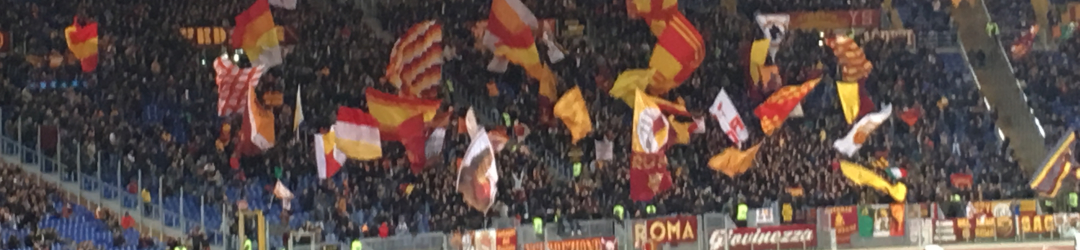

Roma fell to their third defeat in a row on Sunday, when Napoli edged them out 2-1.
The performance was much improved compared to the one that had seen them lose to Udinese in midweek. However, Napoli were the better team, and deserved to be the winners.
It leaves Roma above their opponents just via goal difference, as they look to cling on to fifth spot in the table. And if they want to stay there, they will have to do something to reverse this trend.
Under pressure boss Paulo Fonseca showed his recognition of the team’s struggles by changing their formation – as well as a host of personnel – for the Napoli game. Only Chris Smalling kept his place in the starting lineup from the Udinese loss, as Fonseca switched to three at the back.
While it did not lead to the desired result, at least it showed that Fonseca was willing to change. It was an acknowledgement of the troubles Roma have been having with their usual setup.
The new shape, basically a 3-5-2, but with Lorenzo Pellegrini and Henrikh Mkhitaryan acting as advanced midfielders, had its benefits and its issues.
In terms of positives, it allowed Jordan Veretout to thrive from the heart of midfield. The Frenchman had been somewhat restricted by Fonseca’s old tactics in recent weeks, but restored to the centre of the pitch, he could grab the game by the scruff of the neck. That’s what he needed in order to show his full value.
Veretout’s performance was one of the standouts, while another was Edin Dzeko’s. The striker seemed to have more support in the new shape, and consequently, his hold-up play was better. That even led to Roma’s goal, as Dzeko won the ball in the middle and played in Mkhitaryan.
Embed from Getty ImagesHowever, as the result would suggest, the plan wasn’t perfect. One of the main problems came in the defensive phase.
While the extra man at centre-back gave Roma the cover they needed, it also meant they had one less player in the final third. The effects of this were felt not so much when attacking, but when defending.
The issue became apparent on the flanks. Much of Napoli’s danger came from wide areas. Indeed, both their goals came from passages of play on the wings.
Roma’s wing-backs did not have as much protection as they normally would have. This meant they failed to close down Mario Rui, whose cross led to Jose Callejon’s opener – and the Portugal international had put in enough deliveries before then to send a warning.
And while the winner from Lorenzo Insigne was a moment of individual brilliance, it also came from Roma failing to cover the danger out wide.
The issue with width also affected Roma in attack – not for the first time under Fonseca. One of the major problems was the slowness with which the team shifted the ball from one side to the other.
Of course, playing in the July heat, players will likely not reach the athletic levels they normally would. But this is not a question of the players moving – it is about them moving the ball.
Too often, Roma took one pass too many to get the ball out wide. Players would have the ball in the middle of the pitch, but would be unwilling to play a direct switch to the channels. Instead, they had to get the ball out wide via another pass in between.
It slowed Roma down, allowing Napoli to regain their shape. This has always been a problem under Fonseca, even when his side were playing well earlier in the season.
It raises a question of whether Roma are lacking the confidence to perform such duties, or if it is an instruction. Either way, it isn’t helping them make much progress.
When Leonardo Spinazzola got the ball wide on the left, he looked like he could create danger at times. The wing-back wanted to get at the Napoli backline with his dribbling and intriguing crosses. But by the time the ball had arrived at his feet, it was often too late to cause any genuine danger.
In contrast, Roma’s goal came when they broke at pace, down the middle of the pitch. If they could replicate that fluidity in the wide zones as well, it could lead to an upturn in fortunes.
It is no coincidence that Aleksandar Kolarov, who didn’t play against Napoli, has just three league assists this season. This is one of the most dangerous attacking full-backs in Serie A, whose crossing is one of his best assets.
However, he hasn’t caused as much danger this year – and perhaps it’s now clear why. Roma simply do not get the ball wide enough, quick enough.
There are many minor issues for Fonseca to deal with as a matter of urgency. But this appears to be a fundamental skill that could easily be fixed. If he can at least make that adjustment, it might just help Roma turn things around.

Leave a Reply