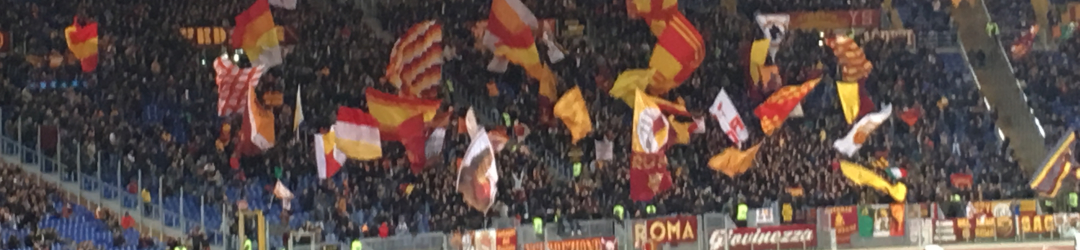

Qualifying for the Champions League has a huge impact on a club like Roma’s transfer plans.
From the perspective of potential signings, the prestige of playing in the Champions League instantly makes a destination more attractive.
And from the club’s perspective, the financial implications of reaching UEFA’s top tournament can significantly boost the budget going towards new additions – as long as those endless Financial Fair Play guidelines can still be navigated.
Roma are now embarking on their first summer transfer window as a Champions League club since 2018, leading to major anticipation over what kind of business they will execute.
To further fuel that anticipation – or perhaps not judging by some of the lower entries – here’s a ranking of Roma’s past 12 summer transfer windows after Champions League qualification, from worst to best.
12. 2018
Main signings: Steven Nzonzi, Javier Pastore, Bryan Cristante, Justin Kluivert, Nicolò Zaniolo, Davide Santon, Robin Olsen, Antonio Mirante, Iván Marcano, Ante Ćorić
Main sales: Alisson Becker, Radja Nainggolan, Kevin Strootman, Łukasz Skorupski, Grégoire Defrel, Gerson
A significant factor in why Roma began a lengthy absence from the Champions League was their transfer activity in 2018, their last summer before this one after a top-four finish.
Considering they’d just reached the Champions League semi-finals, Roma had a chance to build something. But instead, sporting director Monchi destroyed what they had.
Replacing Alisson Becker – so pivotal to the Champions League run – with Robin Olsen in goal was one of the biggest downgrades ever made at Roma.
As for midfield adjustments, it was true that neither Radja Nainggolan nor Kevin Strootman had had their best season, but selling both at once was a misjudgement – especially when they were replaced by a pair of expensive flops in the shape of Javier Pastore and Steven Nzonzi.
On the flipside, Roma did look to the future with the signing of Justin Kluivert (who fell just short of expectations) and the shrewd capture of a relatively unknown Nicolò Zaniolo. But not all of their investments in youth paid off. For example, Ante Ćorić and William Bianda each cost €6m but the former only made three appearances off the bench and the latter never made it out of the youth ranks.
11. 2010
Main signings: Adriano, Fábio Simplício, Guillermo Burdisso
Main sales: Marco Motta, Alessio Cerci, Marco Andreolli, Ricardo Faty, Mauro Esposito
After falling just short of the Scudetto under Claudio Ranieri, Roma’s summer of 2010 was somewhat overshadowed by the club being put up for sale as the Sensi family’s holding company found itself in significant debt.
Naturally, there would be no lavish spending in the transfer market. And even the high-profile signing that Roma did make – Adriano from Flamengo – flopped badly.
Mercifully, the club managed to avoid too many major exits from the squad, but it was a time of uncertainty ahead of the new American ownership coming in the following year.
10. 2002
Main signings: Davide Bombardini, Luigi Sartor, Pep Guardiola, Traianos Dellas
Main sales: Marcos Assunção, Sebastiano Siviglia
Roma’s four new signings in the summer of 2002 would go on to make 113 appearances between them, at an average of just 28 (and a quarter) each.
Pep Guardiola struggled to find space in the team after arriving from Barcelona and left before the season was out.
New defender Traianos Dellas was the only of the four to emerge with some kind of credit, but it took a couple of years – after he won Euro 2004 with Greece – for the former Sheffield United man to settle in the team.
Marcos Assunção was among Roma’s more established departing players, along with the releases of Antônio Carlos Zago and Abel Balbo.
9. 2017
Main signings: Patrik Schick, Rick Karsdorp, Cengiz Ünder, Aleksandar Kolarov, Lorenzo Pellegrini, Grégoire Defrel, Héctor Moreno, Maxime Gonalons
Main sales: Mohamed Salah, Antonio Rüdiger, Leandro Paredes, Mario Rui
There was widespread enthusiasm for Monchi as he got to work in his first summer with Roma, who’d just claimed their record points total in Serie A but were moving into a new era with the replacement of Luciano Spalletti as head coach with Eusebio Di Francesco – not to mention the retirement of Francesco Totti.
Optimism was soon dashed when Roma found themselves up against the FFP tidal wave, with Mohamed Salah, Antonio Rüdiger and Leandro Paredes representing big losses.
Monchi tried to redeem a positive narrative by breaking the club’s transfer record on Patrik Schick, but he wasn’t what Roma needed at the time and that decision limited their ability to properly replace Salah.
There were a couple of decent signings to offer promise – Cengiz Ünder began to grow into his new surroundings and Aleksandar Kolarov was a €5m bargain, even at 31 – but the median would be underwhelming, with Héctor Moreno, Grégoire Defrel and Maxime Gonalons all struggling.
And it was small news at the time, but Roma let a future Italy international and Scudetto winner slip through their grasp in the shape of Davide Frattesi as part of the Di Francesco appointment – something else they may have come to regret.
8. 2007
Main signings: Juan, Cicinho, Ludovic Giuly, Marco Andreolli, Mauro Esposito
Main sales: Cristian Chivu
On the back of a second-placed finish, with a points total distant from the sides above and below them, Roma only really had one significantly successful signing in 2007.
Juan was the man in question, becoming a bargain addition from Bayer Leverkusen and going on to spend five years with the club.
He effectively replaced the most significant player to leave Roma that summer, with Cristian Chivu vacating the centre-back department to join Inter.
Elsewhere, Ludovic Giuly was a respectable reinforcement from Barcelona, but only lasted a year with the club. Cicinho, coming in from Real Madrid, was a let-down in contrast.
7. 2004
Main signings: Philippe Mexès, Simone Perrotta, Matteo Brighi, Matteo Ferrari, Mido
Main sales: Emerson, Walter Samuel, Francisco Lima, Jonathan Zebina, Gianni Guigou
2004 was a summer of big change for Roma, as Fabio Capello left for Juventus, just like he had in his playing career 34 years earlier.
He took key midfielder Emerson with him in a move that tarnished the talented Brazilian’s reputation in Rome, while the sale of Walter Samuel to Real Madrid was another big blow.
Roma felt the affects of their loss of talent and endured one of their most turbulent seasons ever in 2004/05.
The signings of Philippe Mexès and Simone Perrotta served the club well in the long run, with the duo staying for seven and nine years respectively, but Mido was a massive flop in attack.
6. 2014
Main signings: Juan Manuel Iturbe, Kostas Manolas, Mapou Yanga-Mbiwa, Davide Astori, José Holebas, Seydou Keita, Ashley Cole, Leandro Paredes, Salih Uçan
Main sales: Medhi Benatia, Dodô, Tin Jedvaj, Rodrigo Taddei
Looking to build on a positive first season under Rudi Garcia, Roma won the race for one of Serie A’s most coveted young wingers in 2014: Juan Manuel Iturbe.
Sadly, Iturbe didn’t live up to expectations at Roma, and neither did new left-back Ashley Cole, who was eventually beaten in the battle for starts by fellow newcomer José Holebas. But one signing that did prove to be successful over the long-term was the addition of Holebas’ Greek compatriot, Kostas Manolas.
Manolas was the main reinforcement for a centre-back department being deprived of Bayern Munich-bound Mehdi Benatia, whose exit rubbed president James Pallotta the wrong way.
5. 2016
Main signings: Alisson Becker, Federico Fazio, Juan Jesus, Bruno Peres, Gerson, Mario Rui, Thomas Vermaelen
Main sales: Miralem Pjanić, Maicon, Seydou Keita, Morgan De Sanctis, Vasilis Torosidis, Leandro Castán
The most important deals for Roma in the summer of 2016 were turning the previous year’s loans for Edin Džeko, Salah, Rüdiger and Emerson Palmieri permanent, as well as renewing Wojciech Szczęsny’s stay for another year.
That last deal meant that Roma would have to wait another year to properly see the benefits of what would turn out to be their best new buy in 2016: Alisson.
Federico Fazio also made a positive impression at centre-back, more so than Juan Jesus and definitely more so than Thomas Vermaelen.
The summer was marred, though, by the bitter exit of Miralem Pjanić to rivals Juventus.
Furthermore, Roma failed to make it past the play-off round of the Champions League and thus dropped into the Europa League, despite their third-placed finish in Serie A the season before.
4. 2008
Main signings: John Arne Riise, Jeremy Ménez, Júlio Baptista, Simone Loria, Artur
Main sales: Mancini, Ludovic Giuly, Gianluca Curci, Matteo Ferrari
With Giuly shifted on after a single year and Brazilian winger Mancini also departing, Roma replenished their attacking ranks with the signings of Jérémy Ménez and Júlio Baptista from Monaco and Real Madrid respectively.
Baptista made a decent early impression, scoring a winner in his first derby, while Ménez was a raw talent at the age of 21, eventually scoring 12 goals from 112 games for the club.
But the pick of the bunch of their signings was John Arne Riise from Liverpool. The Norwegian left-back scored some memorable goals in big games to become something of a cult hero over his three-year stay.
3. 2001
Main signings: Antonio Cassano, Ivan Pelizzoli, Diego Fuser, Saliou Lassissi, Francisco Lima, Leandro Cufré, Christian Panucci
Main sales: Hidetoshi Nakata, Cristiano Zanetti, Amedeo Mangone, Manuele Blasi, Eusebio Di Francesco, Alessandro Rinaldi
Buoyant from winning Serie A and thus qualifying for the Champions League for the first time since the European Cup days, Roma made a statement signing by bringing in one of Italian football’s biggest prospects: Antonio Cassano.
Although he had a lukewarm debut season, Cassano would eventually form a strong partnership with Totti in attack.
Roma’s other major reinforcement was experienced Italian defender Christian Panucci, who would spend eight years with the club and become their highest-scoring defender of all time.
It would be remiss not to mention the big disaster of the 2001 transfer window, though. Roma signed Saliou Lassissi from Parma but he never played over the next three years due to injury, leading to a court case about some of his wages not being paid.
As for sales, Roma didn’t lose anyone who had played more than 30 games in their Scudetto-winning season.
2. 2006
Main signings: David Pizarro, Mirko Vučinić, Marco Cassetti, Max Tonetto, Júlio Sérgio, Ricardo Faty, Rodrigo Defendi
Main sales: Mido, Leandro Cufré, Ivan Pelizzoli, Gaetano D’Agostino, Damiano Tommasi, Olivier Dacourt
Roma were bumped up to a Champions League place after the adjustments to the 2005-06 Serie A table in the wake of the Calciopoli scandal.
Some useful signings followed as the club sought to establish themselves as a side that could get used to those heights and challenge regularly.
David Pizarro and Mirko Vučinić were excellent signings, while experienced full-backs Marco Cassetti and Max Tonetto were useful too.
Of Roma’s 2006 signings, Júlio Sérgio is another who went on to have a good career with the club, even if he was only third-choice goalkeeper when he arrived and had to bide his time.
Meanwhile, Roma’s most expensive sale was Mido, which highlights how the team wasn’t weakened too much.
1. 2015
Main signings: Edin Džeko, Mohamed Salah, Antonio Rüdiger, Lucas Digne, Emerson Palmieri, Wojciech Szczęsny, Iago Falque, William Vainqueur, Norbert Gyömbér
Main sales: Alessio Romagnoli, Andrea Bertolacci, Lorenzo Pellegrini, Mapou Yanga-Mbiwa, Mattia Destro, Adem Ljajić
To make amends for one of their worst January windows ever in 2015 – the one where Seydou Doumbia, Víctor Ibarbo and Nicolás Spolli joined – Roma sporting director Walter Sabatini was on a mission that summer.
The headline signing was of Džeko from Manchester City, while there was also a buzz around the addition of Salah from Chelsea after his impactful few months in Serie A with Fiorentina.
Szczęsny was an upgrade on Morgan De Sanctis in goal, while Rüdiger earned his place in the backline and Lucas Digne was an effective loan player at left-back.
Better still, Roma managed to fund their recruitment drive without losing too many key players. Alessio Romagnoli and Andrea Bertolacci, both products of the club’s academy who had been playing elsewhere on loan, generated substantial funds by moving to AC Milan.
Ironically, Roma didn’t immediately see the best of some of their new signings. Džeko had a difficult first year, Emerson had to wait to earn his place from Digne and the likes of Iago Falque and Norbert Gyömbér were disappointments.
But on the whole, the influx of talent improved Roma for the subsequent season, with Džeko and Salah forming a prolific partnership to fire Luciano Spalletti’s side to a record points total for the club in 2016/17.

Leave a Reply