Traversing the ever-shifting tides of Italian football’s Southern derby, we take a deep dive into the Giallorossi’s turbulent relationship with the recently crowned champions, Napoli.
The story of the Derby del Sole, literally the “Derby of the Sun”, is one of intensity, shifting alliances, and the ever-changing landscape of Italian football. The rivalry between our beloved Giallorossi and Napoli, often represents far more than just 90 minutes on the grass, it signifies the South’s defiance against the typical dominance of northern Italian football clubs and illustrates the pride, pain, and hope of two of the country’s most well supported sides. However, this sadly does not come without violence and is often a fixture that would be advised tourists avoid when enjoying their pizza, pasta and gelato.
Origins
In the early decades of Italian football, Roma and Napoli found themselves united in a common cause. Both clubs were founded in the south of the country, often overlooked and overshadowed by the footballing establishments of the north, such as Juventus, Inter, and AC Milan due to the political landscape. The people of Rome and Naples, encouraged by a sense of southern identity, would travel together to away games, joining in solidarity rather than rivalry.
This early sense of friendship was reinforced by social and economic ties between the cities, and the shared experience of marginalisation within Italy. Fixtures between Roma and Napoli were often spirited but not hostile, with the focus on challenging the northern giants as opposed to each other.
The transformation: From friendship to fierce competition
As football in Italy grew in popularity, so did the ambitions of both clubs. The 1970s and especially the 1980s signified a turning point. The 1984 arrival of Diego Maradona in Naples, a signing that stunned the footballing world, elevated I Partenopei into a continental force. With Maradona, Napoli clinched their first-ever Scudetto in the 1986-87 season, followed by another in 1989-90, and a UEFA Cup in 1988-89, a true golden era for the club.
La Magica, meanwhile, was enjoying its own golden generation. In the early 1980s, with stars like Bruno Conti (the mayor of Rome, as some of us know him!), Agostino Di Bartolomei, Falcão, and the emerging Giuseppe Giannini, the Giallorossi captured the Serie A title in 1982-83 and reached the European Cup final in 1984, losing out to Liverpool. With success, came rivalry and every meeting between Roma and Napoli began to carry higher stakes; pride, points, and the right to claim supremacy of the South.
As both clubs grew in European stature, the atmosphere at the Olimpico and the Stadio San Paolo grew more hostile. The matches became more of a presentation of national identity and the typically positive relationship cooled as both sets of supporters became increasingly competitive, each determined to prove their dominance over their local rival, with the two clubs accessible by a two-hour train.
Sadly, the fixture in recent years has often been overshadowed by fan violence; this is highlighted in 2014, when bystanding Napoli fan Ciro Esposito was fatally shot by a Roma ultra. The fixture occasionally leads to bans on away travel, such as in 2023 when the two sides’ supporters notably clashed resulting in violent scenes on a motorway. The fixture has also been overshadowed by discriminatory chanting by the Roma faithful towards the city of Naples, leading to a match being briefly stopped in November 2019, an experience that is all too common for Napoli supporters.
Notable matches and memorable moments
- 1986-87 Season: Napoli, via Maradona’s wizardry, defeated Roma enroute to their first Scudetto 1-0. The victory was a statement: not only could Napoli challenge the traditional powers, but they could also overcome their southern counterpart as well. The victory was arguably the first shot fired in this fierce rivalry.
- October 1987: Roma’s clash with Napoli ends as a 1-1 draw after the visitors secured an equaliser, upon which their player, Salvatore Bagni, proceeded to make a provocative gesture to the Roma fans. “It’s my fault that there’s no friendship any more,” a remorseful Bagni later admitted.
- 2005-06 and Beyond: After Napoli’s relegation and rebirth, the returning derbies became testaments to the resilience of their fanbases. As both clubs consistently challenge for European places in the modern day (and occasionally the Scudetto!), the derby has become one of the most anticipated fixtures on the Italian football calendar, with each steeped in tension.
Culture, identity, and the origins of the Derby del Sole name
The “Derby del Sole” tag was founded due to the shared temperatures of the cities given their geographical locations. Although Rome is geographically more central, both cities have historically identified with the south, standing together against the north’s dominance in cultural and economic terms.
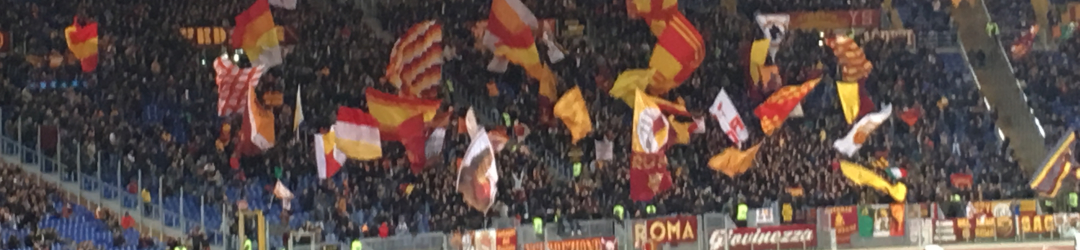
While the rivalry can at times be intense, with fierce ultras on both sides and moments of hostility, it is also renowned for its incredible atmosphere and the pride both cities take in their heritage. The matches showcase ultra passion, from choreographed displays to deafening chants and pyrotechnics.
The modern era
In today’s game, the fixture remains a highlight of the Italian football calendar, despite often being overlooked by the casual football fan. The matches often have implications for European qualification and, occasionally, the title race itself. Recent encounters have seen star talents flourish, from the two homegrown heroes such as Francesco Totti and Lorenzo Insigne to Victor Osimhen, Dries Mertens (don’t forget the infamous dog celebration!) and of course, the man who’s worn both colours, Romelu Lukaku.
Beneath the competitive nature of the derby, there remains a surprising, subtle acknowledgement of shared roots and a reminder of the days when Roma and Napoli stood side by side against the powerful northern clubs.
In this story of friends turned rivals, the Derby del Sole continues to be a must-watch and an ever-growing testament to the passion, pride, and rebellious nature of both cities. This is highlighted by Napoli recently being crowned champions, notching them above Roma in all-time title wins, a painful statistic for Romanisti.

Leave a Reply