
In May 2019, ahead of what should have been Claudio Ranieri’s final match in charge of Roma, I sat down and wrote an article titled: Thanking Claudio Ranieri, the man who made Roma believe again.
During his 12-game stint at the end of that season, I’d been impressed with the custodian’s handling of a difficult situation and the foundations he had put in place for his successor. I’d even been an advocate for Ranieri to stay longer; little did I know at the time that he’d be back six years later to inherit an even bigger challenge.
As the baton is formally passed to Gian Piero Gasperini after Ranieri’s miraculous run that lifted Roma from 12th to 5th in the Serie A table, via an early drop to 15th, I decided to revisit my article from six years ago and send a new, similar tribute to the inspirational third reign of Ranieri’s long-term association with Roma.
Claudio Ranieri’s second spell in charge of Roma may have lasted only 12 games, but in that time, he has led a minor transformation, which has nearly seen the club sneak into the Champions League places. Alas, that dream looks virtually impossible now – even if the man himself retains a glimmer of hope – but that should not undermine the work Ranieri has done.
So I began in 2019, with Roma set to finish 6th in Serie A, three points off the top four. Of course, we all know that Roma still haven’t finished in the top four since. But remarkably, Ranieri got closer than anyone since he stepped aside at the end of his previous caretaker stint. By the end of the 2024-25 season, for which he was in charge for the last 26 league games, Roma were 5th, just one point off 4th.
Considering I would have willingly handed Ranieri the reins for the 2019-20 season before, this was an opportunity for me to see what he could do again over the course of a longer stretch of the season. He was unavoidably a caretaker before, but this third spell in charge – even though he always insisted it would never last beyond this season – allowed him to actually manage a team, put his stamp on them and take them in the right direction. And what a journey it was.
When the 67-year-old took charge of his hometown club for a second time, Roma were at one of their lowest ebbs under the American ownership. They had just been dumped out of the Champions League by Porto – not embarrassingly, but in a naive, frustrating manner – coming days after a 3-0 loss to bitter rivals Lazio. The team looked devoid of confidence and ideas. All optimism was gone.
That was my illustration of the mood around Roma in March 2019. Consider what it was like in November 2024. While it had been a bleak picture for a team who were still 5th in the table at that juncture, this time around Roma were in the bottom half and they looked to be anchored down in it. The ownership was different this time, but the club was still in decreasingly popular American hands, this time led by The Friedkin Group instead of James Pallotta. Now, they were under as much scrutiny after their decision to sack Daniele De Rossi four games into the season and replace him with the underwhelming Ivan Jurić. Points had been dropped to the likes of Cagliari, Empoli, Genoa, Monza and Verona – not to mention a 5-1 loss to Fiorentina in which Roma’s own loaned-out academy graduate, Edoardo Bove, ran the show. In the Europa League, there was a helpless loss to Elfsborg. All optimism really was gone this time. It looked like a lost cause. The end of the season couldn’t come quickly enough.
It would require a brave man to take up the reins. The club had not been under this much scrutiny by its fans for a long time, and they were in desperate need of someone who could get them onside again. In Claudio Ranieri, they couldn’t have asked for a better man. Rome-born and a big Roma fan, Ranieri would relish the opportunity to coach his beloved team once again. From the outset, he made it clear that he was only focusing on the 12 remaining games and nothing thereafter, but in the process, he unearthed a sense of unity that had been missing for months, even years.
Ranieri was even braver to put his legacy on the line this time around. He had retired five months earlier after leading Cagliari to Serie A survival. He had no duty to rescue his Roma once again – and this time it really was a rescue job, as they would be just two points above the relegation zone after he lost his first two league games. But he went on to play a blinder. He immediately calmed a toxic environment, demanding a cease to the booing of Roma’s own players – chants of ‘we only support the shirt’ had been the theme tune of the season up until then – and instantly getting the challenging media under his spell.
Once again, he had no eyes for anything other than the battles on the pitch ahead of him. Ranieri was this time promised a role at the club beyond the end of the season, as someone who’d have a say in appointing his successor as an advisor, but he wasn’t swayed whenever asked about potential candidates to fill his shoes. Nor was he persuaded when the form kept getting better and better under him and people began asking him to stay for next season as well.
For Ranieri, it was a game-by-game approach. And after a loss to Como in December, Roma’s game-by-game record in the league began to look unrecognisable. Win, draw, win, draw, win, win, draw, win, win, win, win, win, win, win, draw, draw, win, win, win, loss, win, win. There was a 19-game gap between league defeats. Moreover, Roma achieved their best points tally in a second half of the season – in fact, better than any other team in the division – since Ranieri’s first spell in charge during the title challenge of the 2009-10 campaign.
In Ranieri, Roma found someone that, albeit temporarily, everyone could get behind. His optimistic personality made him an instantly likeable character.
Everyone fell for his charm in 2024 and 2025 too. His optimism was this time emphasised to be grounded in hard work, the only way he knew. But he wasn’t afraid to consider the prospect of getting Roma to break into the top four by the end of the season. No team had ever done it in the Champions League era in Serie A without having occupied a top-four spot after any matchday in the season until the last. Roma couldn’t quite do it either, but there were a couple of moments on the final day when, as things stood, 4th was in their grasp. Ultimately, it was out of their hands, but with Ranieri at the helm, everyone was behind Roma’s push and were proud to at least achieve Europa League football for next season.
At that moment in time, Roma needed to go back to basics. Step by step, they could rebuild. Under Ranieri, Roma have been much more compact and hard to break down. They have only conceded more than two goals in a game once.
Ranieri got the basics right for Roma again. Players like Leandro Paredes and Mats Hummels were no longer ignored. Paulo Dybala was placed at the centre of his strongest lineup when fit. Angeliño wasn’t wasted as a makeshift member of a back three, but was allowed to become a key player in his natural position. And once again, Roma showed resilience in defence. This time they had a better keeper to call upon in Mile Svilar – and this time, over a larger sample, they never conceded more than two goals in a game in the league. Not on Ranieri’s watch. Under his tenure, there were clean sheets against Parma (twice), Lazio, Venezia, Monza, Empoli, Cagliari, Lecce, Verona, Inter, Fiorentina and Torino.
All of a sudden, Roma’s distant dreams of reaching the Champions League looked a possibility again. They were grinding out good results against difficult opponents – a win over Sampdoria, a draw against Inter. Roma had worked their way back into contention for a top four place, somewhere they hadn’t been all season. Unfortunately, it appears to have been too little, too late. Even with an impressive 2-0 win over champions Juventus, some costly draws against smaller teams look to have proven fatal. But that’s no real fault of Ranieri’s. Without him, Roma might have been a lot further away.
As mentioned earlier, Roma really did dream about qualifying for the Champions League until the final day. They would never have envisaged that in October, when things were spiralling out of control. Maybe it was too little, too late again, but once more, Ranieri wasn’t the man to blame and they couldn’t have any complaints. There were frustrating results earlier in the season, such as a loss against to-be-relegated Empoli under De Rossi and a draw with eventual bottom side Monza under Jurić. Roma would have been a lot further away – by miles – without Ranieri.
For Ranieri, it has always been about the team first. His approach has been completely selfless, but strong. In turn, the atmosphere around the team has improved. Players like Steven Nzonzi and Federico Fazio have played much better under his leadership, and consequently, the side have performed as a more effective unit, greater than the sum of their individual parts.
Now for who improved under his watch this time around? You name them – Zeki Çelik, Bryan Cristante, Paredes, Hummels, Dybala, Matías Soulé, you could go on. In fact, I tracked the average player ratings per match of Roma’s squad by the main Italian newspapers throughout the season. Almost without exception, every average was better with Ranieri (solely apart from Niccolò Pisilli’s score from Gazzetta Dello Sport, Corriere Dello Sport, La Repubblica and Corriere Della Sera – which also returned lower averages for Artem Dovbyk and, somewhat anomalously, Alexis Saelemaekers). In other words, the only player there was widespread notice of a decline from was a youngster in his first full season in the first team. Some kind of drop-off should have been expected. Otherwise, Ranieri was as impressive a coach and mentor as he was a tactician.
The league table will tell a story that not much has changed since Ranieri returned. Before he arrived, Roma were in fifth, three points off the top four. Going into the final matchday, they are sixth, still three points off the pace. But that story does not paint the full picture. Ranieri restored a spark of belief that Roma’s dreams might have been possible again. Thanks to him, they were looking up the table again, rather than down it.
This time, the league table does tell a different story, showing the change Ranieri has inspired. Had the season started when he returned to Roma, they would have finished joint-top of the league on the same points as actual champions Napoli and runners-up Inter. Even more so this time, he got them looking up the table rather than down it – when those downward glances would have been even more perilous. To end up one point away from the top four, boasting a better win percentage in the league than when he won the Premier League with Leicester City, and the second best overall of his entire managerial career, shows what an iconic final chapter this was for Ranieri.
He knew a monumental effort was needed to get Roma back where they belong. He almost pulled off the second miracle of his career, which would have made him eligible for footballing sainthood. It wasn’t just a spark of belief this time. It really, nearly ignited.
It will be a sad day for many reasons on Sunday, as De Rossi bids farewell to the only shirt he has known in his career. But Ranieri should also be given the send-off he deserves. He has been a noble father figure, leading the way as the man to remind everyone what it means to love Roma. What an honourable person he is.
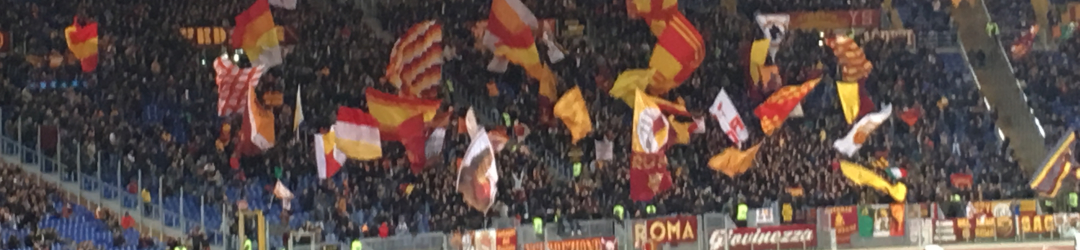
So concluded my piece prior to Ranieri’s combined farewell with De Rossi in 2019. He did get a good reception at the end of his second spell, with a banner unfurled saying: “In the moment of need, you answered present. Now receive the tribute of your people.” That message could have been echoed and amplified again in 2025. But this time, the limelight was all his. The Curva Sud displayed a tifo with Ranieri’s name taking up an entire half of the stand on his final home game, a win over Milan to confirm European qualification. He led Roma with nobility and honour again and allowed us all to love Roma as we should.
Embed from Getty ImagesOf course, Roma may have believed when Ranieri stepped aside in 2019, but they struggled to build on those foundations. His replacement, Paulo Fonseca, took them backwards. José Mourinho sparked fresh belief again and reached the promised land of winning a trophy for the club, but equally never got past 6th in the league. De Rossi showed inklings of potential to lead Roma in the long term, but was still finding his feet. Jurić was far less adequate than even the biggest optimists would have imagined. None of them got Roma as close to a top-four spot as Ranieri himself upon his return.
This time, he will hope to have helped place the club in better hands with the experienced Gian Piero Gasperini, who made a habit of inspiring Atalanta to look up, rather than down the table. Only time will tell which direction Roma are headed in for the long term, but whatever happens, people will look back fondly at this third Ranieri reign. It was incredible to be caught up in and only cemented further his tightly woven connection with the club of his heart and all of ours.
So thank you, Claudio Ranieri, once again. It can’t be said loud enough.

Leave a Reply