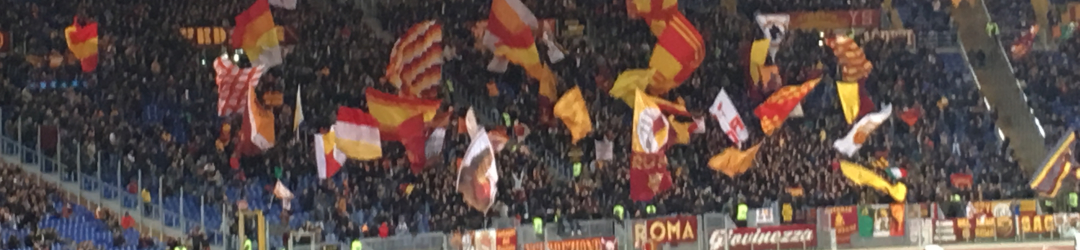

Roma advanced to the quarter-finals of the Coppa Italia by overcoming Parma 2-0 on Thursday night.
After a somewhat cagey first half, Lorenzo Pellegrini scored a brace after the break – including one from the penalty spot – to give his side the win.
Today marks the first time @LorePelle7 has scored more than once in a single game in his entire professional career.
— Giallorossi Yorkshire (@RomaYorkshire) January 16, 2020
He just keeps on getting better...
Cristante’s new comfort zone
Bryan Cristante was given his first chance to start since coming back from an injury, but did so in unfamiliar territory. Deployed in between Gianluca Mancini and Chris Smalling in the centre of defence, as opposed to midfield, Cristante had to show different qualities to normal.
The Italian was composed enough on the ball and kept up his concentration levels. Passing has never been his strong point, but playing longer passes from deep – even if not always accurate – reduced the risk of him giving the ball away in the middle.
While Cristante has improved this season, it still remains to be seen what kind of midfielder he is. Not exactly a goalscorer, a playmaker, or an out-and-out defensive midfielder, he has gained his role in the team through his work rate. Perhaps the game against Parma showed he may not be a midfielder after all – with Paulo Fonseca admitting after the game that it might not be the last time Cristante is deployed in defence.
New system isolates Diawara
Cristante’s position change came as part of Fonseca’s switch to an innovative system, which most closely resembled a 3-4-3 diamond (a 3-3-1-3, or even a 3-3-3-1, so to speak). With Aleksandar Kolarov and Alessandro Florenzi playing as wing backs, Lorenzo Pellegrini pushing high up the pitch near striker Nikola Kalinic and Cengiz Under and Diego Perotti playing as inverted wingers, there was an important role to be played by Amadou Diawara in central midfield.
Essentially tasked with holding things together all alone, Diawara had to cover more ground than usual. He has dominated as part of a midfield duo, but asking even the best holding midfielders in the world to do a one-man job in the middle is a tall order.
Lo schieramento dell’#ASRoma
— AS Roma Data (@ASRomaData) January 16, 2020
Difesa a tre con #Cristante centrale, #Under e #Perotti stretti nei mezzi spazi, #Florenzi e #Kolarov alti ad occupare l’ampiezza.
Un 3-5-1-1 o 3-3-3-1#ParmaRoma pic.twitter.com/Y3o5P6KUSs
Roma’s average positions from the first half painted an intriguing picture, whereby it looked like the players had formed a circle around Diawara. Fortunately, he wasn’t overran in midfield, as the likes of Jasmin Kurtic and Juraj Kucka had off days for the hosts. But the question remains whether Fonseca will be able to ask Diawara – or anyone, for that matter – to do the same job against teams with more talented midfields.
Kalinic needs to keep composure
There was also a first start since injury for striker Nikola Kalinic, who has had to patiently wait behind Edin Dzeko in the pecking order all season.
The Croatian worked hard when leading the line, doing some of the simple things well, and others not so well. His involvement on the ball was limited, but he acted as a focal point. In some ways, he played like Dzeko – just not as effectively.
He had a good chance to get a shot at goal with space in front of him in the second half, but let fire when the ball was underneath him, meaning he could get no power on it. There was a similar moment on his Roma debut against Istanbul Basaksehir back in September, when once again he should have taken his time to get the ball under control before having a go.
Overall, though, it was one of his better displays so far, and getting 90 minutes under his belt for only the second time in a Roma shirt will have done him some good. A goal is all he requires now to get that extra boost.
Smalling should be superior
The decision to split the backline into a three meant that both Smalling and Mancini had to play slightly wider than usual. With both being right-footed, that meant one had to take one for the team and play far out on their weaker side.
It was Smalling who assumed that responsibility. As the more senior of the two, it was a noble decision which further cemented his leadership. However, his performance suffered as a result.
Not being on his natural side, Smalling found himself having to play passes at unfamiliar angles, which increased the pressure on him. He did not make mistakes defensively, but did not look the commanding presence fans have grown accustomed to seeing.
Smalling is undoubtedly Roma’s strongest defender. Therefore, Fonseca should consider building around him and playing him where he is most comfortable. After all, Mancini is capable of playing on the left of a three, as he demonstrated the last time he played against Roma for Atalanta last January. If Fonseca persists with this system, perhaps the pair should swap sides.
Kluivert contributes from bench
In keeping with the theme of players getting opportunities after injuries, Justin Kluivert made his return as a substitute. Perotti had been among Roma’s best players in the first half, but was starting to fade, so a new injection of pace was needed.
Kluivert provided that in his 20-minute cameo, almost breaking in behind the defence on a couple of occasions. He provided the impetus that Roma needed to keep Parma at bay, as the hosts had been growing into the game after going behind.
Kluivert has been out for longer than expected, but his return could not be better timed, especially with Nicolo Zaniolo out for the season.
Player Ratings: Lopez 6; Mancini 7; Cristante 7; Smalling 6; Florenzi 6; Diawara 7; Kolarov 6; Under 7; Pellegrini 7; Perotti 7; Kalinic 6
Subs: Kluivert 6; Peres N/A; Veretout N/A
Coach: Fonseca 7
Man of the Match: Pellegrini

Leave a Reply